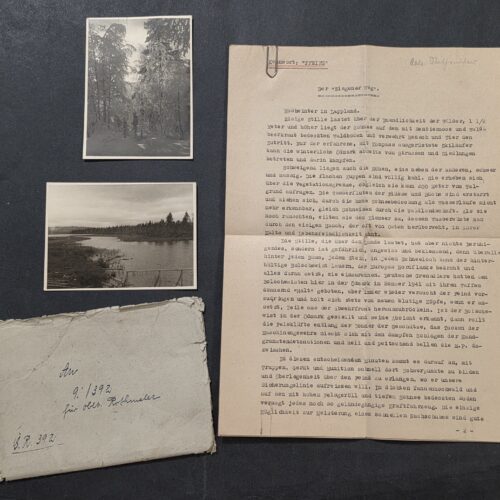
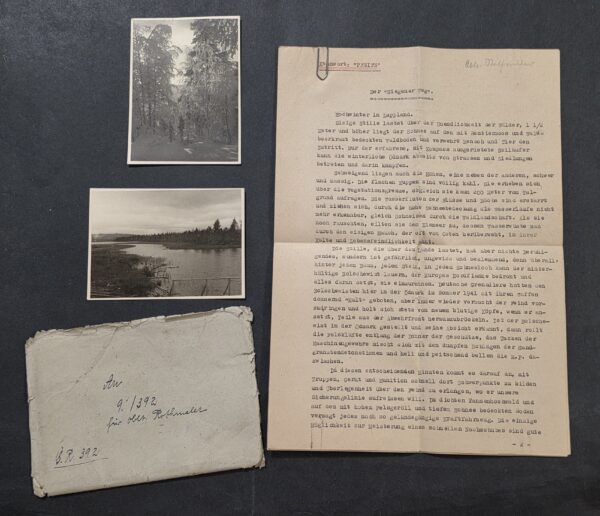
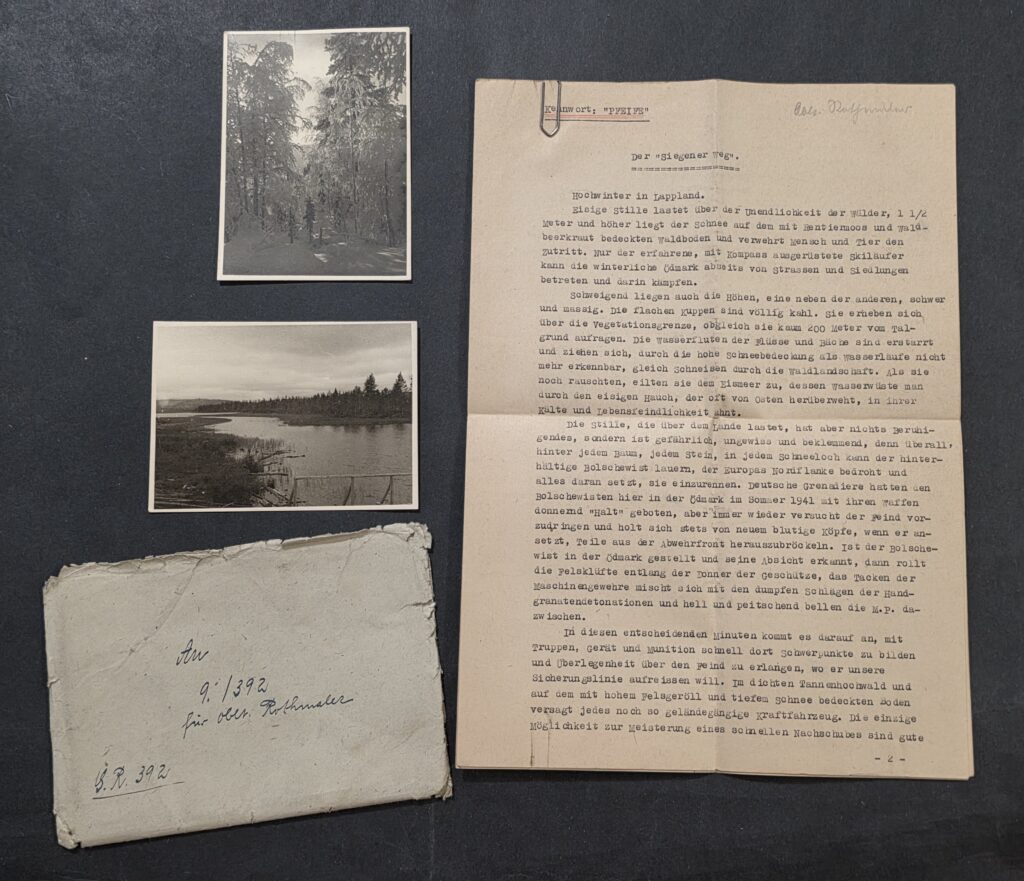
Original WWII German Lapland / Arctic Front document grouping consisting of the original paper cover, a four-page typewritten report, and two original photographs that have been retained together as part of the same lot.
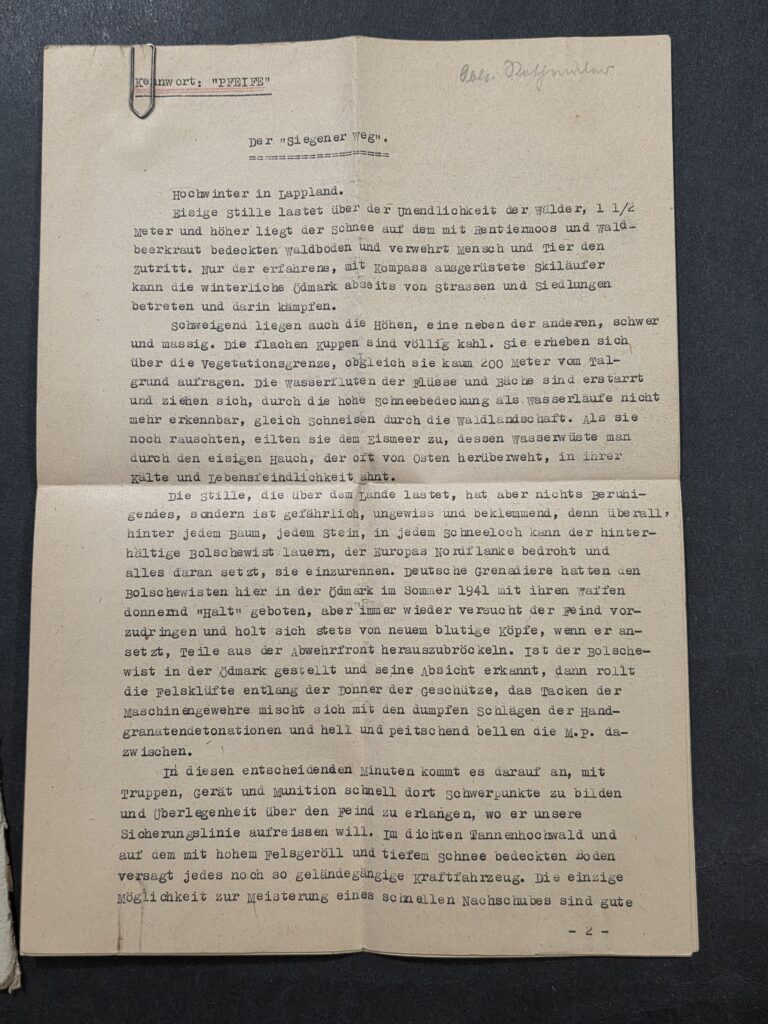
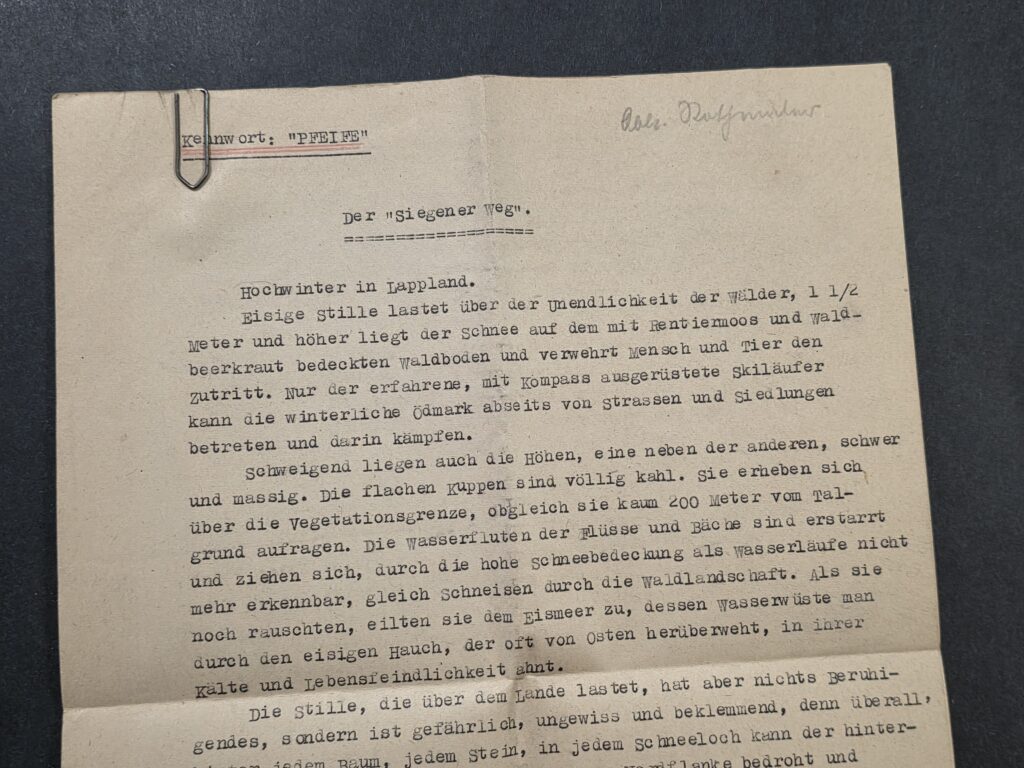
The report is headed:
Kennwort: “PFEIFE” – Codeword: “PFEIFE”
Der “Siegener Weg” – “The Siegener Road/Way”
Hochwinter in Lappland – “Deep Winter in Lapland”
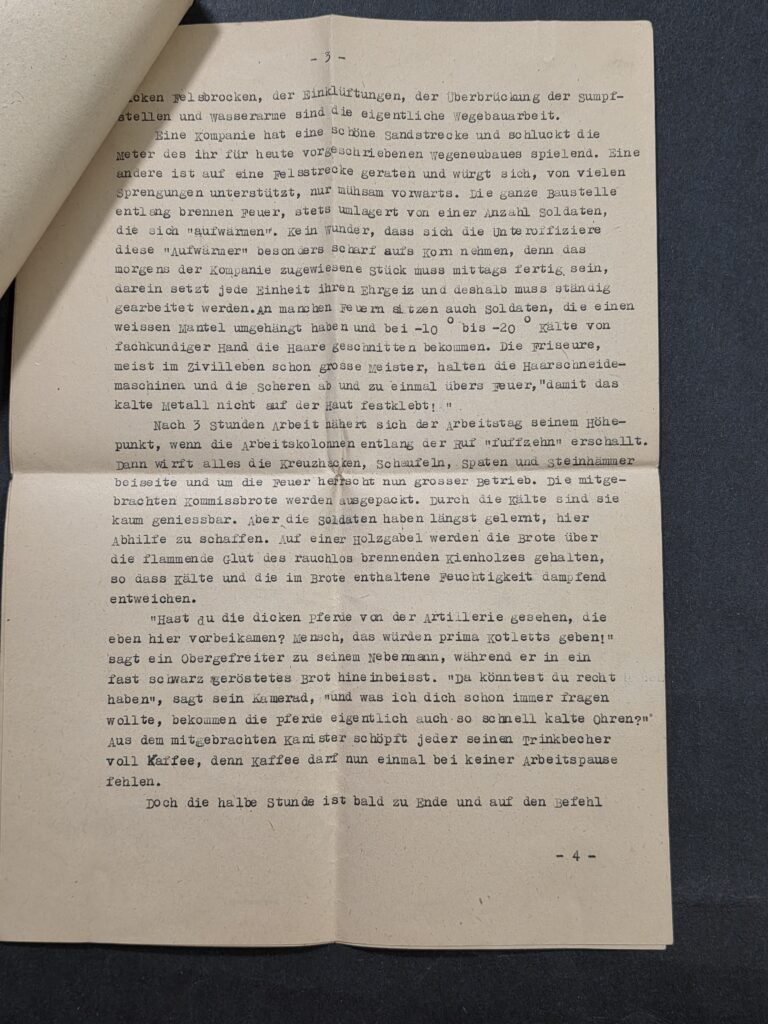
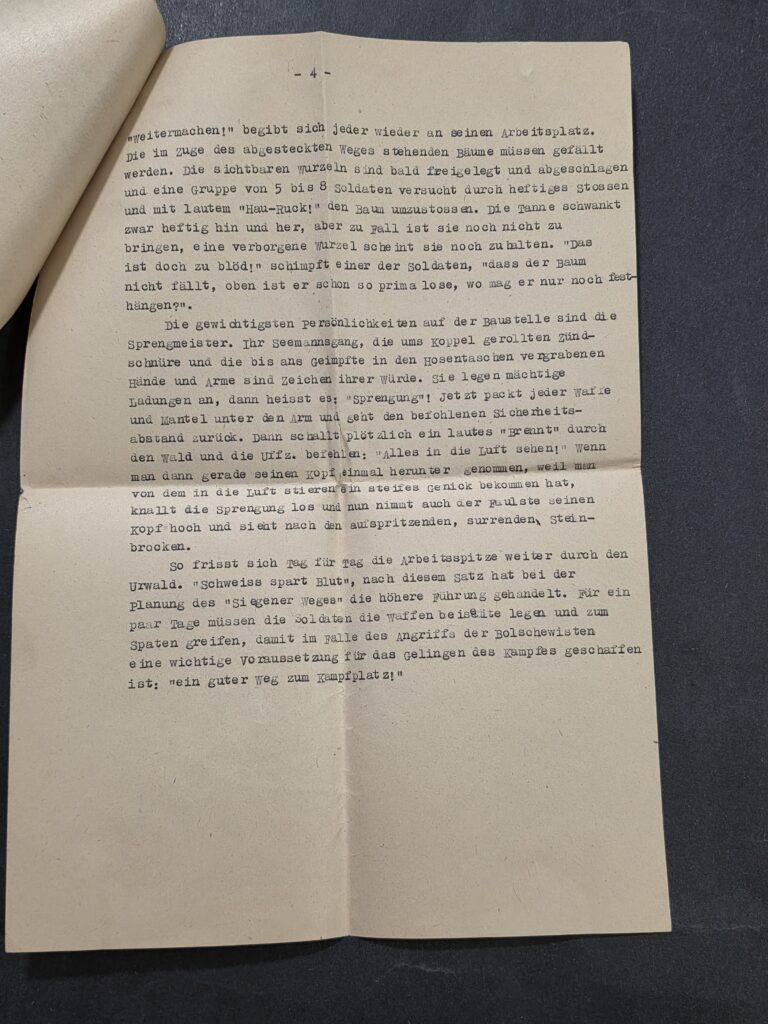
This is an unusually detailed contemporary account concerning German Grenadiers operating in Lapland, describing the extreme winter environment, combat conditions and, most importantly, the construction of a military supply road through virtually untouched Arctic wilderness.
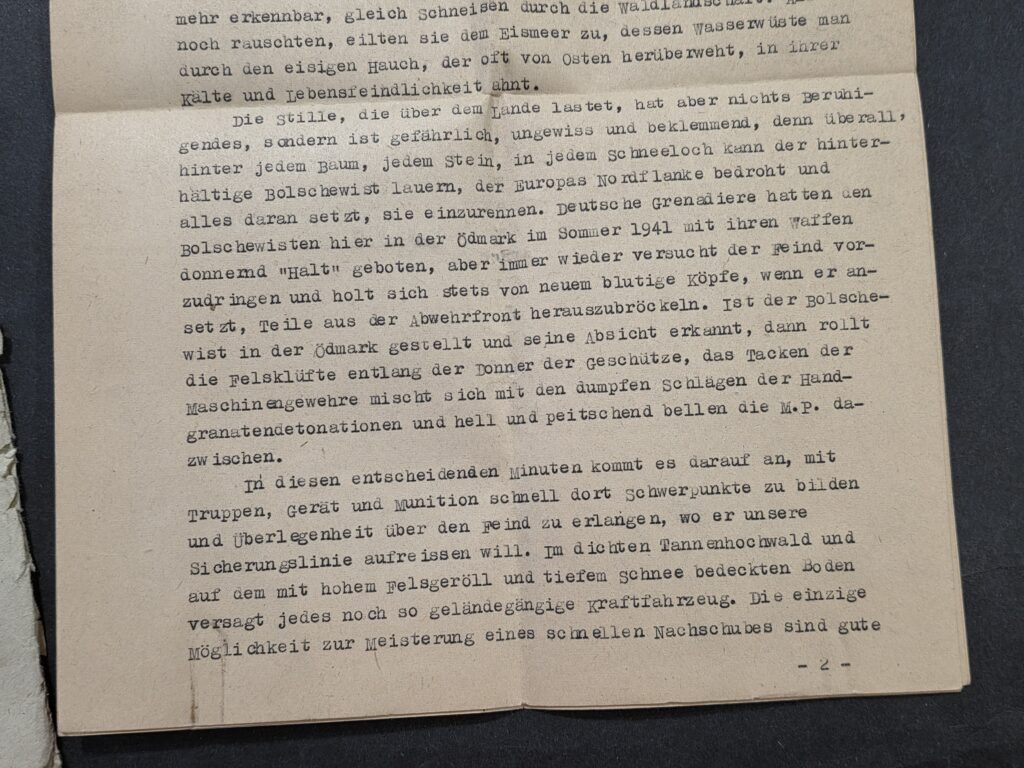
The opening describes snow 1½ meters deep or more, frozen rivers and streams, treeless heights and dense forest where an experienced skier equipped with a compass was required to travel away from established roads and settlements. It states that German troops had stopped Soviet forces in this northern sector during the summer of 1941 and describes artillery, machine-gun and hand-grenade fire when Soviet troops attempted to penetrate the defensive line.
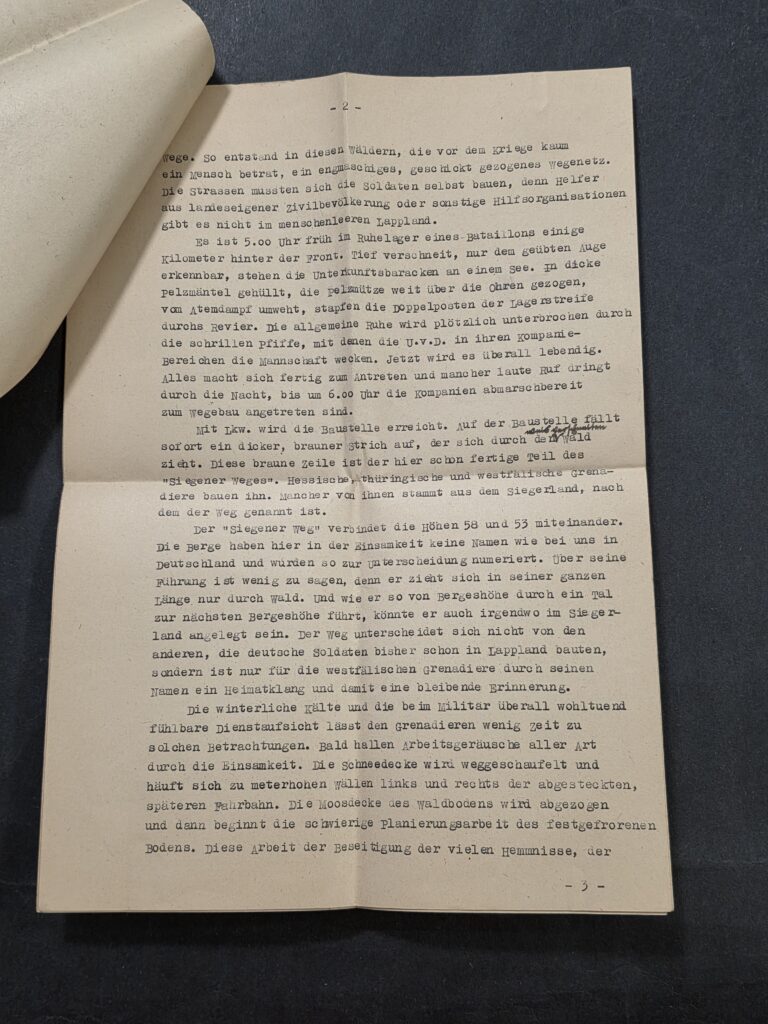
A major portion of the report concerns the construction of the “Siegener Weg.” According to the text, roads had to be constructed by the soldiers themselves because there was essentially no local civilian population or labor organization available in the sparsely inhabited Lapland wilderness.
The document states that the “Siegener Weg” connected Heights 58 and 53. It explains that the otherwise unnamed heights were numbered for identification. The road received its name because some of the Grenadiers constructing it came from the Siegerland region of Germany.
The report gives a fascinating description of everyday work at the site: troops waking at approximately 5:00 a.m. in a rest camp several kilometers behind the front, sentries wrapped in heavy fur coats and caps, companies preparing equipment, travel by truck to the construction site, clearing snow, removing moss from the forest floor, leveling frozen ground, cutting trees, removing roots, building across marshy areas and waterways, and using explosives against rock.
It even records temperatures of approximately -10° to -20°, soldiers warming themselves around fires, field haircuts performed in the cold, frozen bread being toasted over fires to make it edible, and coffee being served during work breaks. One humorous passage records a soldier seeing artillery horses and joking that they would make excellent cutlets, followed by his comrade remarking that the horses themselves were probably wondering how quickly the soldiers would burn.
The final section describes Sprengmeister (demolition specialists) using explosive charges to clear obstacles. The report concludes by explaining that the soldiers temporarily put aside their weapons and took up shovels to create an important prerequisite for combat:
“ein guter Weg zum Kampfplatz!”
Translation: “a good road to the battlefield!”
Two Original Photographs
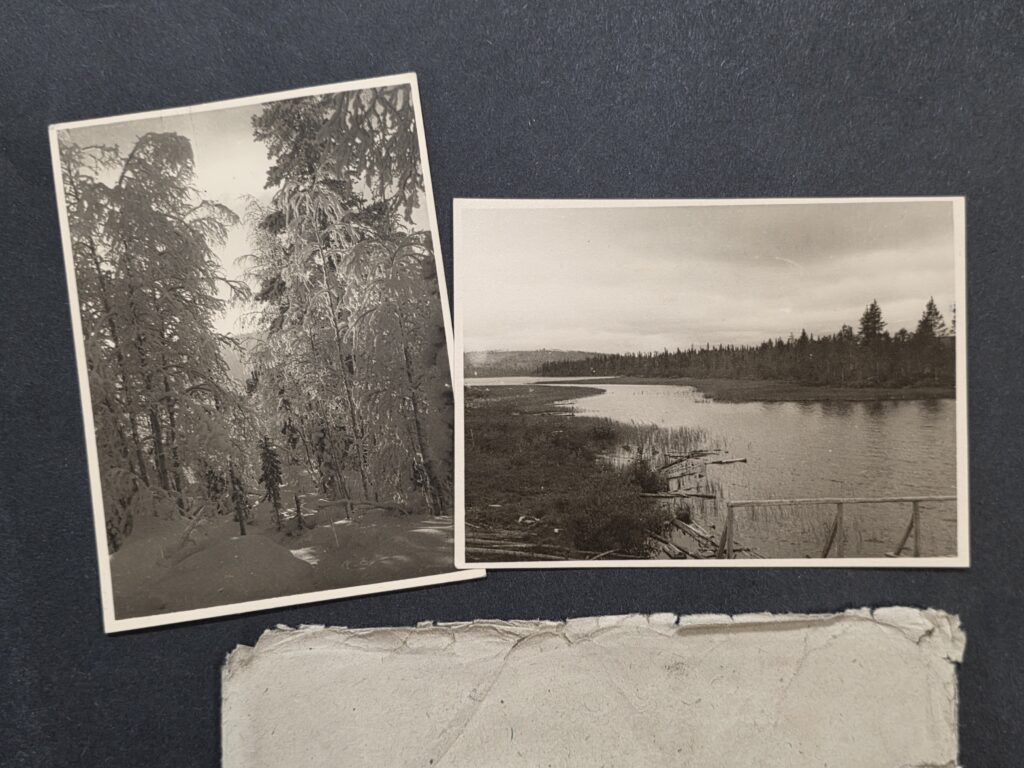
Included are two period black-and-white photographs connected directly with the report.
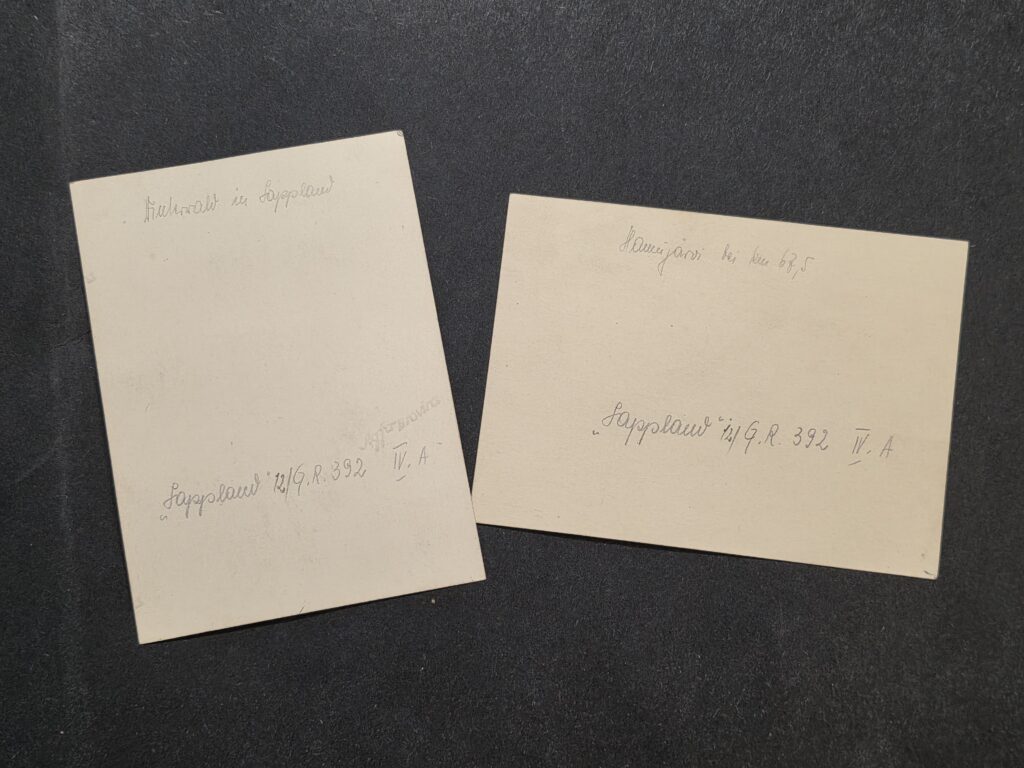
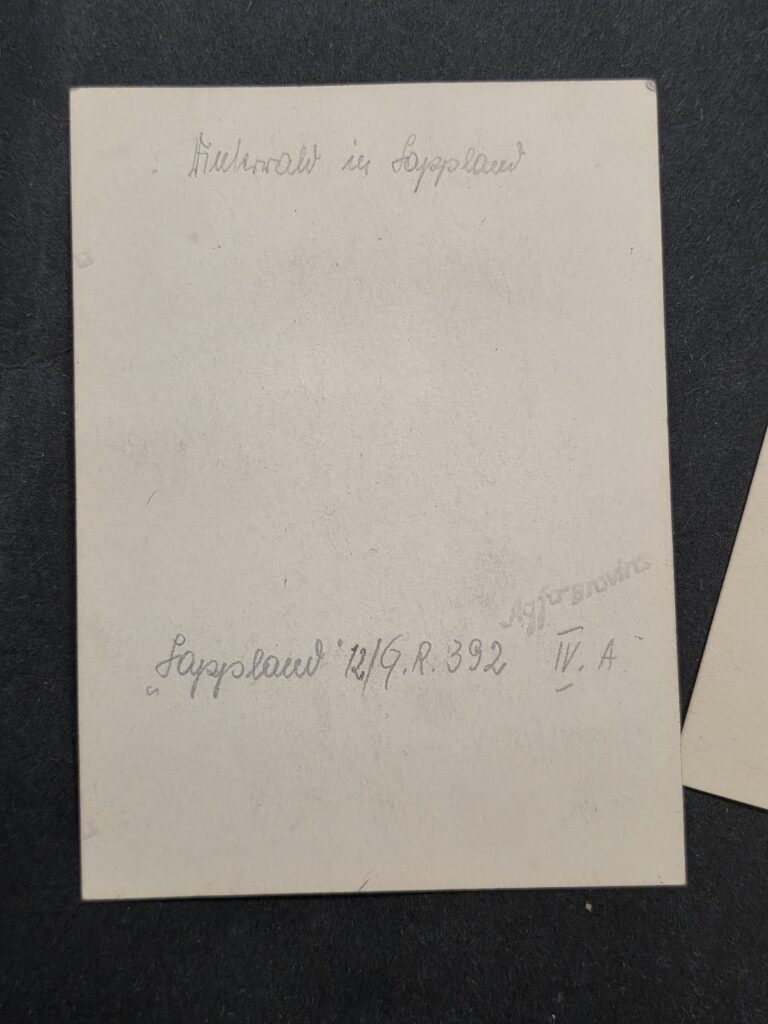
One photograph shows a heavily snow-covered forest and is handwritten on the reverse:
“Fichtenwald in Lappland”
Translation: “Spruce forest in Lapland.”
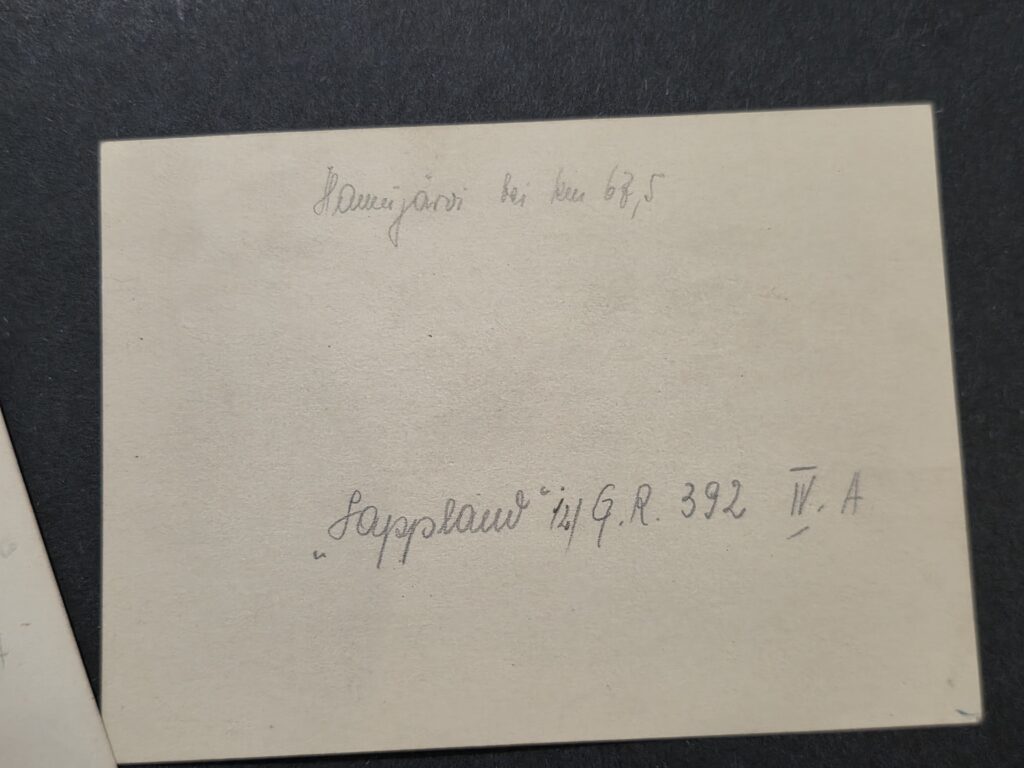
The second shows a remote lake/river and forest landscape. Both photographs carry handwritten “Lappland” references on the reverse along with what appears to be an archival/file notation including “G.R. 392” and “IV.A.” One also appears to reference “Hängejoch bei km 68,5” or similar; please examine the close-up photographs for the exact handwriting.
Original Cover
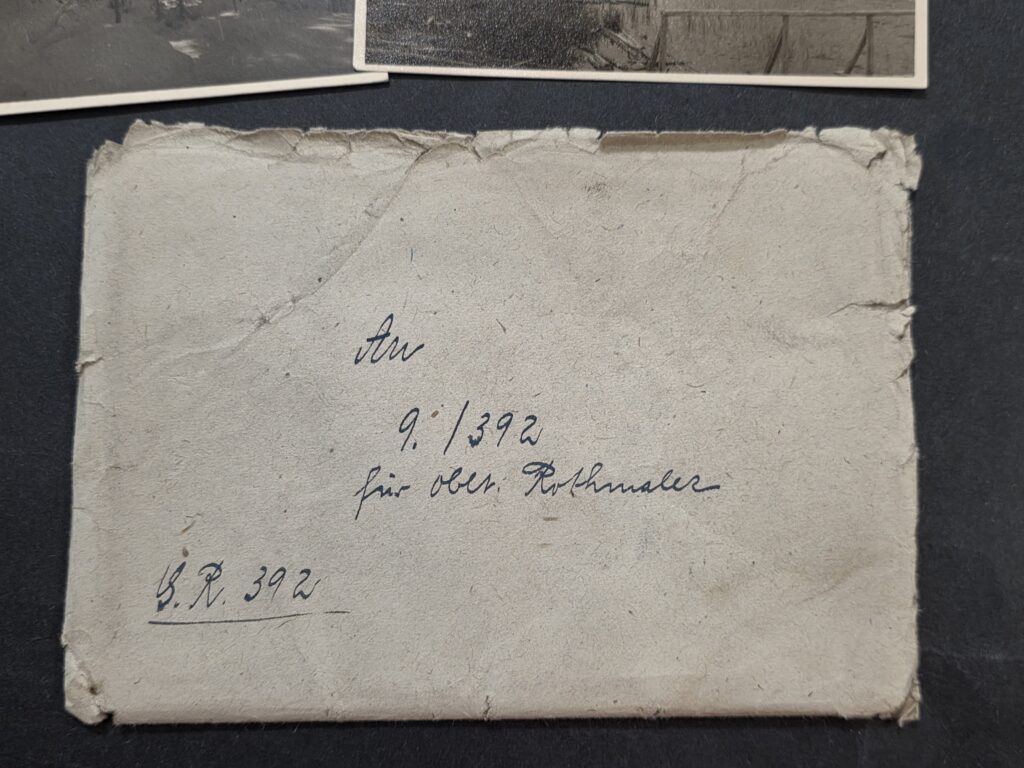
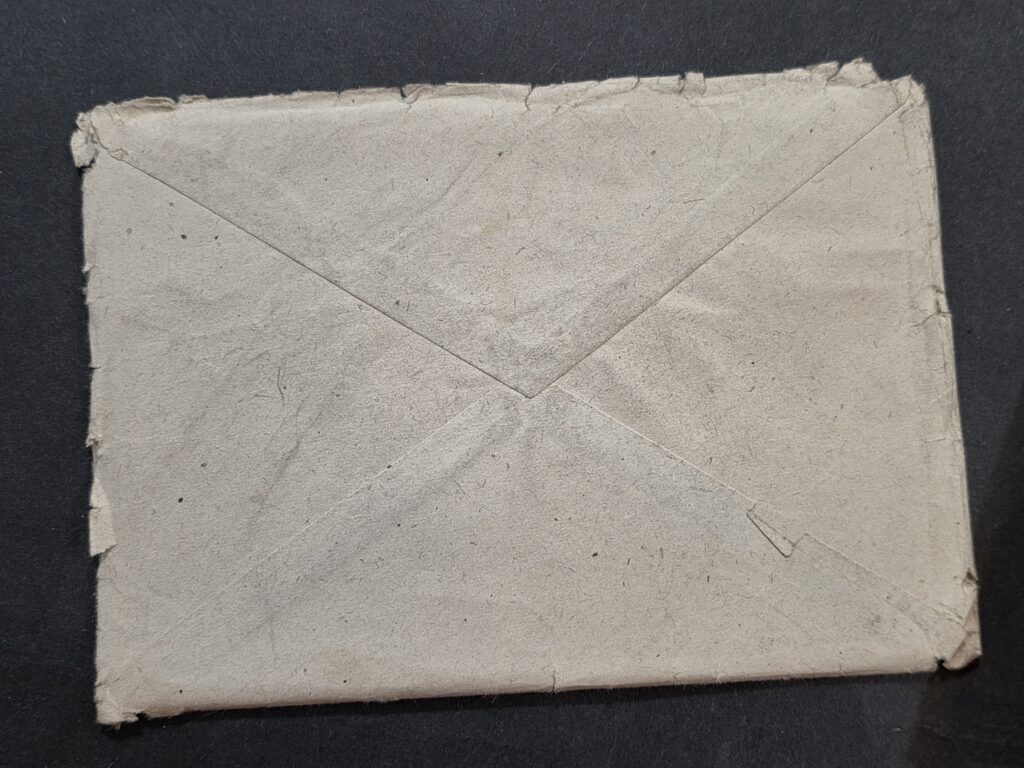
The grouping remains with its heavily used original paper cover/envelope, handwritten with archival-style references including:
“9./392”
“für Oblt. …”
and “G.R. 392”
The precise unit attribution should be researched further rather than assumed solely from these handwritten notations, but the association with Grenadiers, Lapland and the numbered 392 reference is clearly present throughout the grouping.
Condition is original used condition. The four-page report has period folds, toning, edge wear and handling. The original paper cover is intact. The two photographs remain quite presentable with expected age and handling. Please see all photographs for exact condition.
This is a much more historically substantial grouping than a standard military document. The combination of a detailed four-page contemporary narrative, named military road, descriptions of Arctic combat and engineering work, two identified Lapland photographs, and the original file cover makes it an excellent research piece relating to German operations on the far northern front.
Guaranteed original period grouping. Everything shown is included. We combine shipping and ship every day, including Saturdays.
SEO Keywords
WWII German Lapland, Siegener Weg, Hochwinter in Lappland, German Grenadier document, Lapland Front, Arctic Front WWII, German Finland campaign, Grenadier Regiment 392, GR 392, German military road construction, WWII German combat report, German typewritten document, Lapland photographs, German soldier photos, Arctic warfare, Soviet German front, winter warfare, German military engineering, Sprengmeister, Siegerland, original WWII German documents, Lapland military history
Reviews
There are no reviews yet.