Authentic WW1 & WW2 German Militaria

DNSAP Denmark Nazi Party Storkøbenhavn Copenhagen Nazi Propaganda Stamp Labels Set of 5
Original price was: $9.99.$7.99Current price is: $7.99.
2 in stock
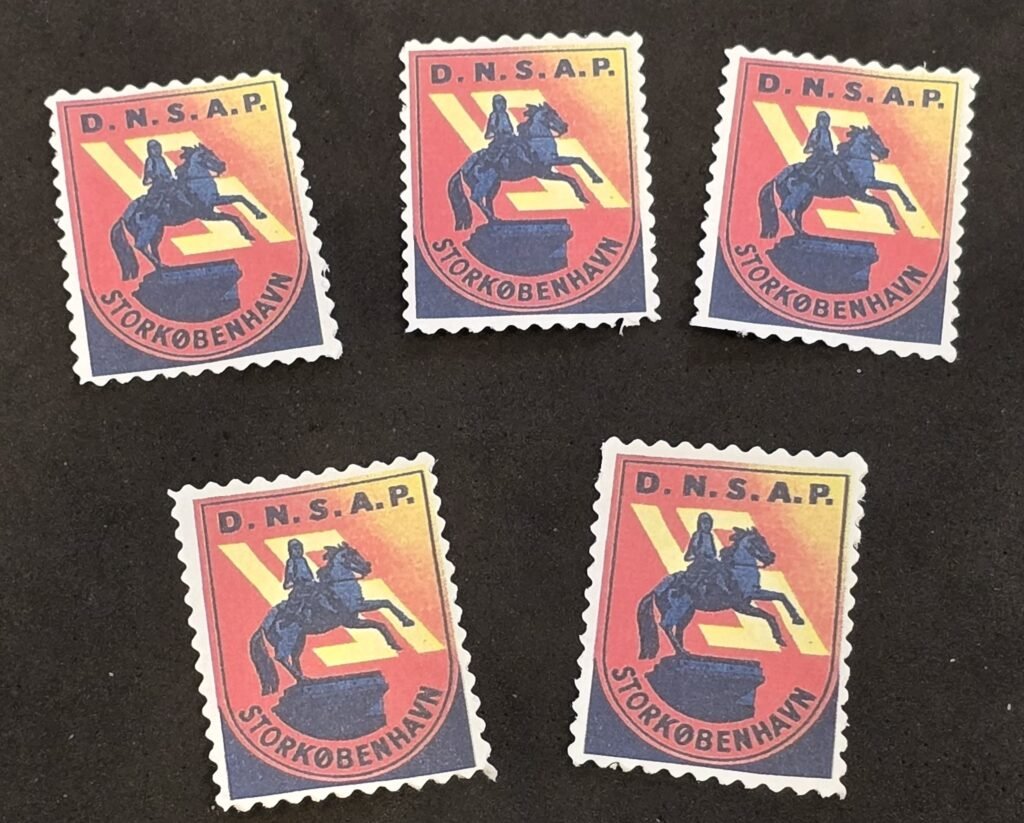
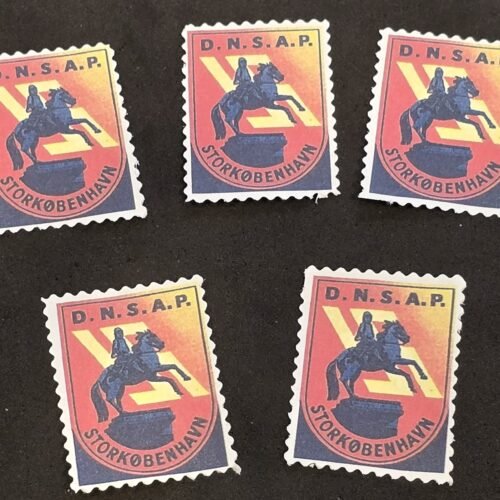
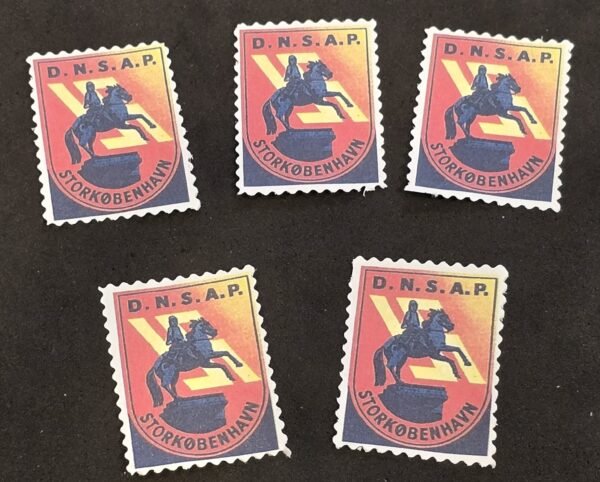
Set of 5 colorful vintage copies marked:
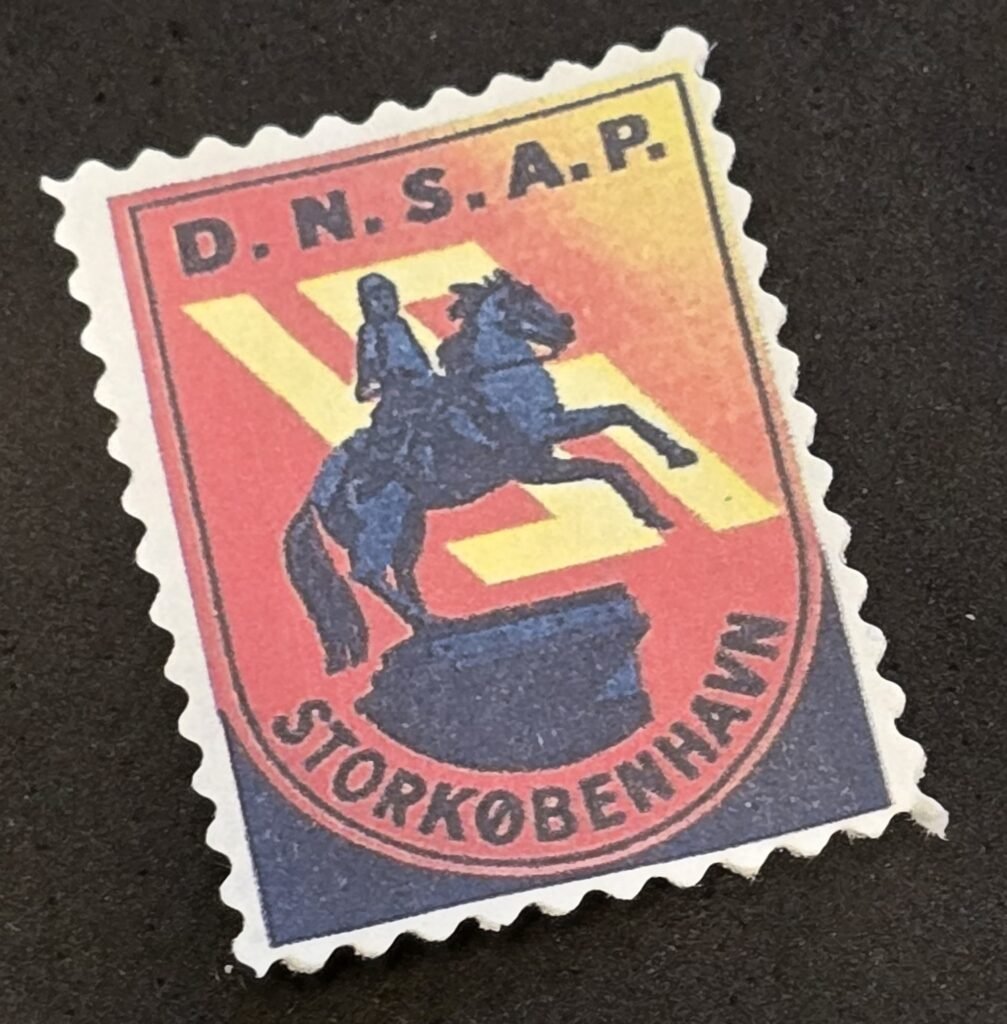
“D.N.S.A.P. – STORKØBENHAVN”
Storkøbenhavn translates to Greater Copenhagen.
The dramatic design depicts an equestrian figure above a large political emblem in orange, yellow and dark blue.
An interesting regional DNSAP design connected with the Greater Copenhagen area.
Unused/MNH vintage copies. Not represented as original wartime examples.
SEO Keywords: DNSAP Storkobenhavn, Greater Copenhagen, Danish Nazi stamp, Copenhagen WWII, Denmark propaganda label, DNSAP regional, MNH Cinderella, Danish National Socialist.
The DNSAP — Danmarks Nationalsocialistiske Arbejderparti (National Socialist Workers’ Party of Denmark) — was founded on November 16, 1930. It was modeled closely on Germany’s NSDAP, adopting much of its political program, organizational structure, imagery, rhetoric, and Führer principle. Its ideology included Danish ultranationalism, anti-parliamentarianism, antisemitism and National Socialism.
The party was initially led by Cay Lembcke (1885–1965). Lembcke was displaced in 1933 by physician Frits Clausen (1893–1947), who became the best-known leader of the Danish Nazi movement. Under Clausen, the DNSAP developed its strongest support in southern Jutland. In Denmark’s 1939 parliamentary election, the party received approximately 31,000 votes and three seats in the Folketing, but it never became a dominant Danish political force.
During the German occupation of Denmark beginning in 1940, the DNSAP supported the occupation and attempted unsuccessfully to obtain greater political power. The movement also became associated with recruitment of Danish volunteers for German military service, including the Waffen-SS and Frikorps Danmark. The party collapsed with the end of the occupation in 1945.
These labels are therefore interesting pieces for studying Danish political propaganda, collaboration, Scandinavian National Socialism, WWII volunteer recruitment, and the visual culture of extremist political movements in 1930s–40s Europe.
Related products
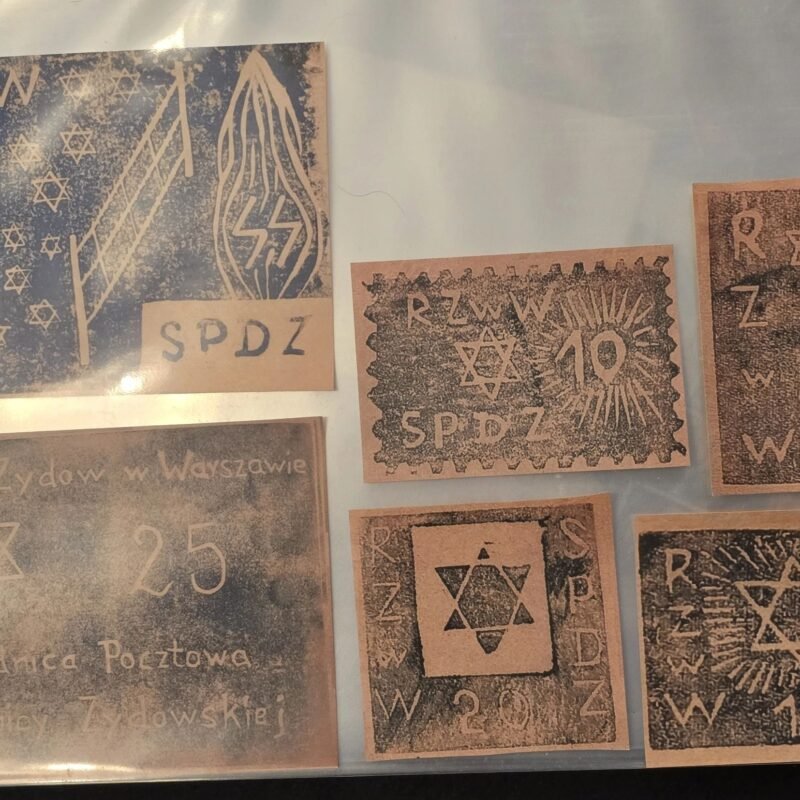
WW2 WWII Jewish Warsaw Getto Ghetto SS Holocaust Currency Notes Money
Original price was: $17.99.$9.99Current price is: $9.99.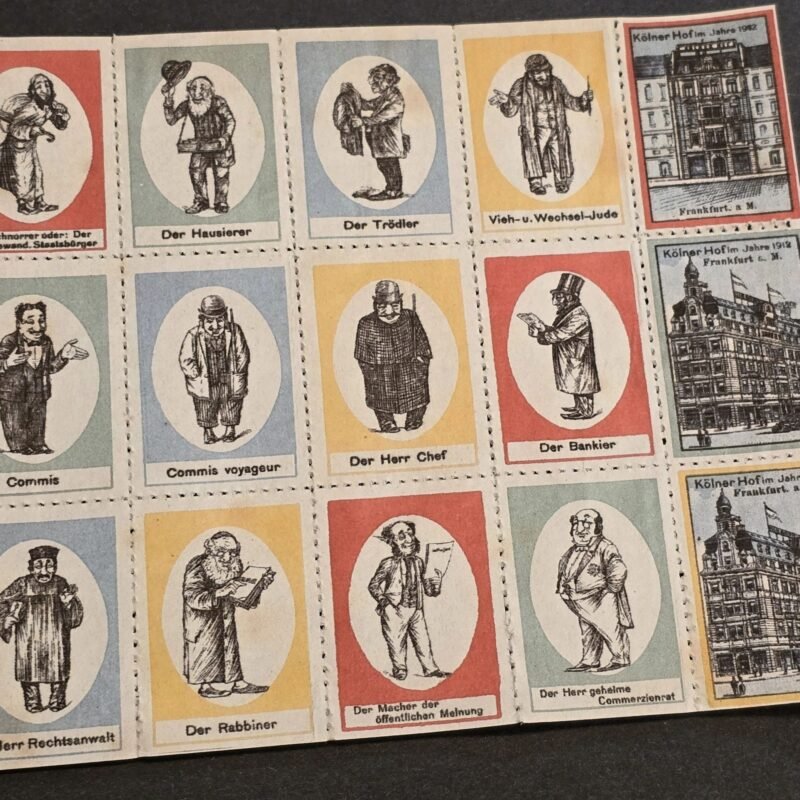
Jewish Anti Semitic JUDE Propaganda Stamp Sheet Labels MNH Perf WW2 NSDAP Nazi German
Original price was: $29.99.$24.99Current price is: $24.99.
Nazi Germany Opferring Stamp set for War Wounded Veterans WW2 German Adolf Hitler Goring Hess
Original price was: $12.99.$7.99Current price is: $7.99.
Reviews
There are no reviews yet.