Authentic WW1 & WW2 German Militaria
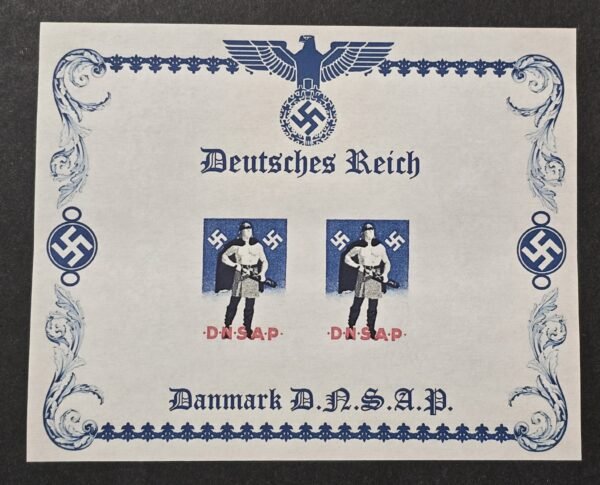
WW2 Third Reich Denmark Nazi Party DNSAP Souvenir Stamp Sheet Swastika Soldier WWII MNH
$4.99
2 in stock
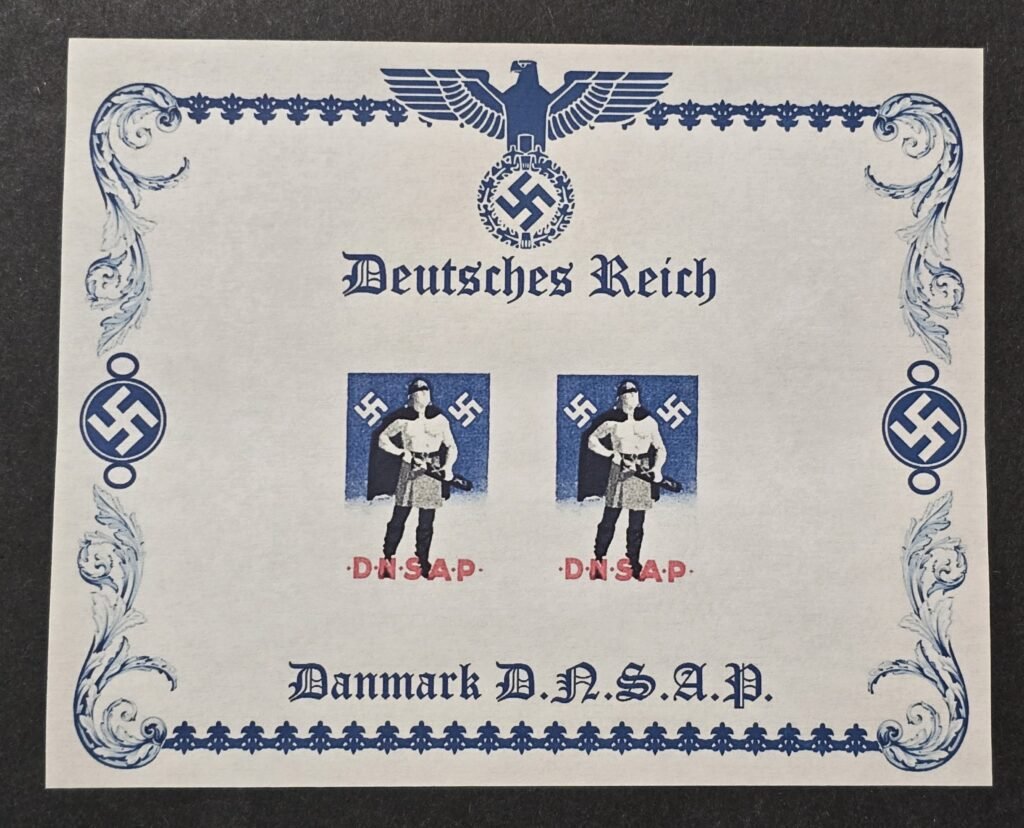
High-quality reproduction souvenir sheet featuring two unusual DNSAP labels depicting a uniformed figure, flanked by swastika symbols and marked D.N.S.A.P.
The blue, red, black and white design is particularly distinctive among Danish political Cinderella material. The surrounding sheet features a large Deutsches Reich heading, eagle-and-swastika emblem, ornate blue border, and Danmark D.N.S.A.P.
The DNSAP operated as Denmark’s National Socialist political party before and during WWII. Although ideologically aligned with German National Socialism and active during the occupation, it remained a minority movement and failed to gain broad Danish electoral support.
This sheet is a modern high-quality reproduction/copy intended as a collectible historical representation.
Condition: MNH-style with full mint gum/glue, attractive condition as shown.
SEO: DNSAP uniform stamp, Denmark National Socialist, Danish WWII Cinderella, Deutsches Reich, swastika stamp sheet, WWII political propaganda, Denmark occupation, MNH reproduction, Danish militaria ephemera.
The DNSAP — Danmarks Nationalsocialistiske Arbejderparti (National Socialist Workers’ Party of Denmark) — was a Danish fascist and National Socialist political party founded in 1930. Its organization, imagery, uniforms, and political program were strongly influenced by Germany’s NSDAP, although it remained a distinctly Danish political organization.
The party adopted the swastika as a principal emblem and produced a wide variety of political propaganda material, including posters, publications, badges, labels, fundraising material, and other ephemera. Under Frits Clausen, who became party leader in 1933, the DNSAP attempted to build electoral support but remained a relatively small political movement.
Following the German occupation of Denmark on April 9, 1940, the DNSAP hoped the new political circumstances would increase its influence. Despite its ideological relationship with German National Socialism and collaboration with the occupying power, it never achieved broad popular support or control of the Danish government. In Denmark’s March 1943 parliamentary election, the party received only a small percentage of the national vote and won three seats.
The DNSAP and related collaborationist circles became associated with recruitment for German military service, particularly among Danish volunteers who served on the Eastern Front. After German defeat and the liberation of Denmark in May 1945, the party effectively collapsed amid the postwar reckoning with Danish collaboration.
The colorful labels reproduced on these sheets are interesting examples of the political imagery and propaganda aesthetics associated with Danish National Socialism, making the sheets useful as affordable display and reference pieces. These are modern high-quality copies/reproductions and are not being represented as original 1930s–40s issues.
Related products
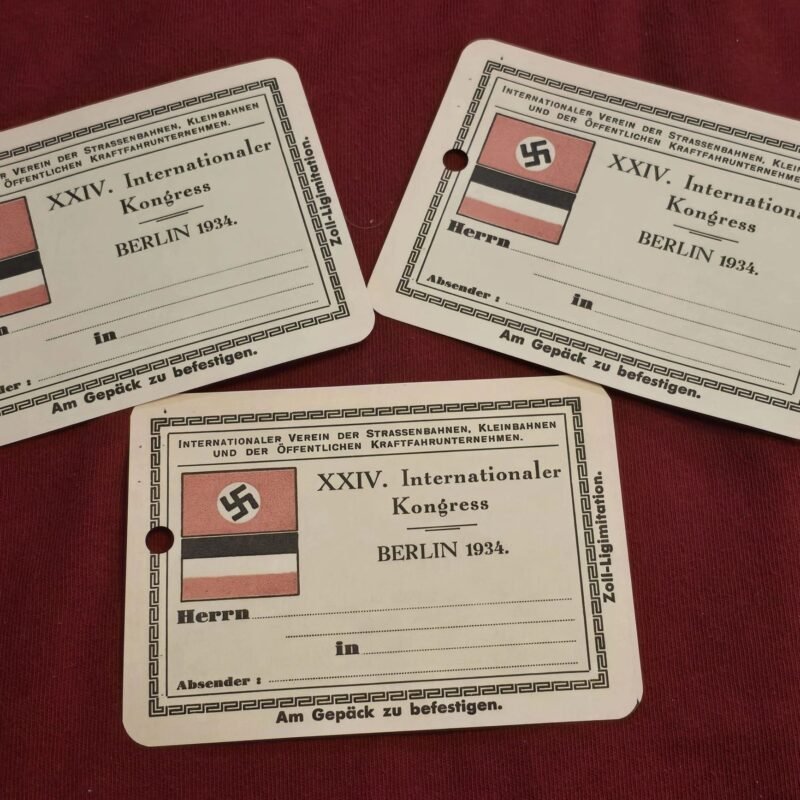
WW2 Nazi German Swastika Flag Luggage Tags Internationaler Kongress Berlin 1934
Original price was: $14.99.$12.99Current price is: $12.99.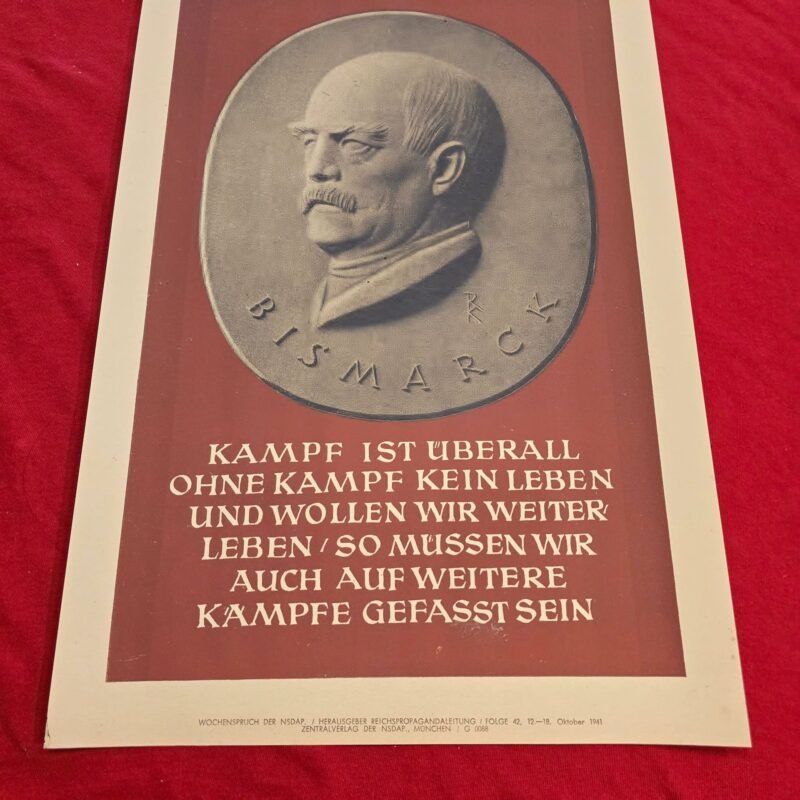
WW2 Nazi German Third Reich NSDAP Bismarck Poster Print Wochenspruch Wall Newspaper
Original price was: $25.00.$18.00Current price is: $18.00.
Reviews
There are no reviews yet.