Authentic WW1 & WW2 German Militaria
Cinco de Mayo: The Battle of Puebla and Its Military Legacy
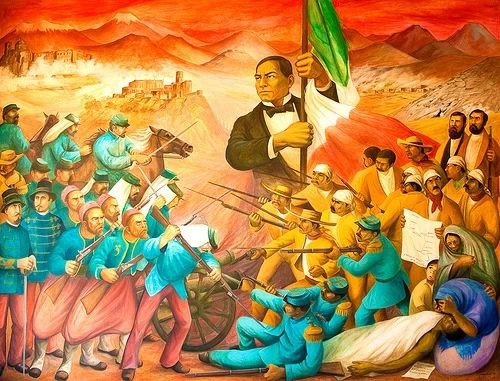
Every year on May 5th, people across the United States and Mexico celebrate Cinco de Mayo, a holiday often associated with Mexican culture, food, music, and national pride. However, many people do not realize that Cinco de Mayo is rooted in a dramatic military conflict that took place during the 19th century — the famous Battle of Puebla.
For military history collectors and enthusiasts, Cinco de Mayo represents far more than a modern celebration. It marks one of the most unlikely battlefield victories in North American history, where a smaller and poorly equipped Mexican army defeated one of the strongest military forces in the world.
The Political Background
In the early 1860s, Mexico was struggling financially after years of internal conflict and political instability. President Benito Juárez suspended payments on foreign debts owed to European nations including France, Britain, and Spain.
France, under Emperor Napoleon III, saw this as an opportunity to expand French influence into the Americas. Napoleon III hoped to establish a French-controlled empire in Mexico and install a European monarch friendly to France.
French troops soon landed in Mexico in 1862.
At the time, the French Army was considered one of the most powerful military forces in the world. Many believed the French would easily conquer Mexico.
The Battle of Puebla – May 5, 1862
The most famous event connected to Cinco de Mayo occurred near the city of Puebla on May 5, 1862.
Mexican forces under General Ignacio Zaragoza prepared defensive positions around the forts of Loreto and Guadalupe near Puebla. The Mexican army was smaller, less experienced, and poorly supplied compared to the professional French expeditionary force.
The French army consisted of approximately 6,000 well-trained troops equipped with modern weapons and backed by a reputation for battlefield dominance throughout Europe.
Mexico fielded roughly 4,000 troops, many of them inexperienced militia and local volunteers.
Against overwhelming odds, the Mexican defenders held their ground.
How Mexico Won
The French commander, General Charles de Lorencez, believed the Mexican defenders would collapse quickly. Instead, the French launched repeated frontal assaults against heavily defended positions.
Mexican artillery and infantry inflicted severe casualties as French troops attempted to storm the forts overlooking Puebla.
Heavy rain and muddy conditions also slowed French movements and disrupted attacks.
After several failed assaults and mounting casualties, the French army was forced to retreat.
The victory shocked Europe and became a powerful symbol of Mexican resistance and national unity.
Military Significance of the Battle
Although the Battle of Puebla did not end the French intervention entirely, it became one of the most celebrated defensive victories in Mexican military history.
The battle demonstrated several important military lessons:
Defensive Terrain Advantage
The Mexican army used elevated fortifications and terrain effectively, forcing the French into difficult uphill assaults.
Morale and Leadership
General Ignacio Zaragoza inspired Mexican troops despite poor equipment and limited resources.
Overconfidence of Superior Forces
The French underestimated Mexican resistance and relied too heavily on direct assaults.
Symbolic Victories Matter
Even though France later captured Mexico City, the victory at Puebla became a lasting symbol of resistance against foreign invasion.
French Occupation and Emperor Maximilian
Despite the defeat at Puebla, France eventually regrouped and occupied Mexico City in 1863.
Napoleon III installed Austrian Archduke Maximilian von Habsburg as Emperor of Mexico, creating the so-called Second Mexican Empire.
French troops remained in Mexico for several years while Mexican republican forces continued resistance operations throughout the country.
After the American Civil War ended in 1865, the United States increased pressure on France to withdraw from Mexico under the Monroe Doctrine.
French troops eventually left Mexico, and Emperor Maximilian was captured and executed in 1867.
Cinco de Mayo Today
Contrary to popular belief, Cinco de Mayo is not Mexico’s Independence Day. Mexican Independence Day is celebrated on September 16.
Cinco de Mayo specifically commemorates the Mexican victory at the Battle of Puebla.
In Mexico, the holiday is most heavily celebrated in the state of Puebla itself. In the United States, Cinco de Mayo evolved into a broader celebration of Mexican heritage and culture.
For military historians and collectors, the holiday also serves as a reminder of one of history’s greatest underdog battlefield victories.
Collecting Mexican Military History
Collectors interested in Cinco de Mayo and Mexican military history often seek:
- 19th century Mexican military documents
- French intervention-era photographs
- Mexican Republican Army artifacts
- Imperial Mexican Empire memorabilia
- Period postcards and prints
- Antique military engravings
- Medals and commemorative items
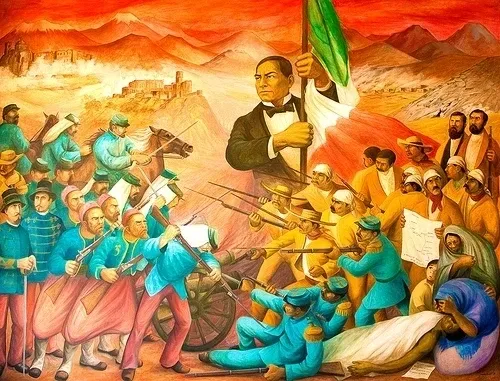
- Battle of Puebla artwork and historical illustrations
Original items connected to the French Intervention in Mexico remain highly collectible due to their historical importance and relatively limited survival rates.
Final Thoughts
The Battle of Puebla remains an enduring example of determination overcoming overwhelming odds. What began as a desperate defensive action became one of the defining moments of Mexican national pride and military history.
Cinco de Mayo is not simply a modern cultural celebration — it is the remembrance of a battlefield victory that demonstrated courage, leadership, and resistance against one of the strongest armies of the 19th century.
For collectors and historians alike, the events of May 5, 1862 continue to represent a fascinating chapter in military history that still resonates more than 160 years later.
WWW.THIRDREICHSHOP.COM
Historical Militaria • Military Antiques • WW1 & WW2 German Collectibles • Historical Documents & Ephemera