Authentic WW1 & WW2 German Militaria
Hitler Jugend Daggers & Knives: History, Makers & Collector Guide
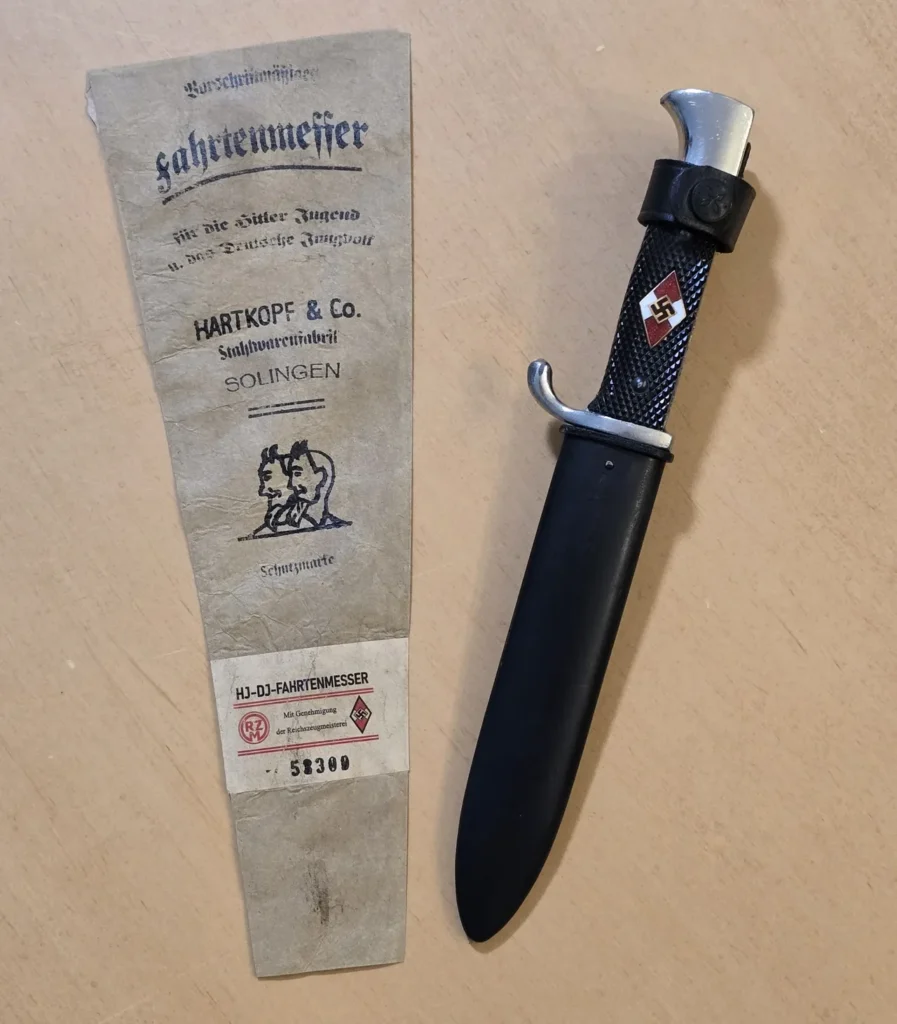
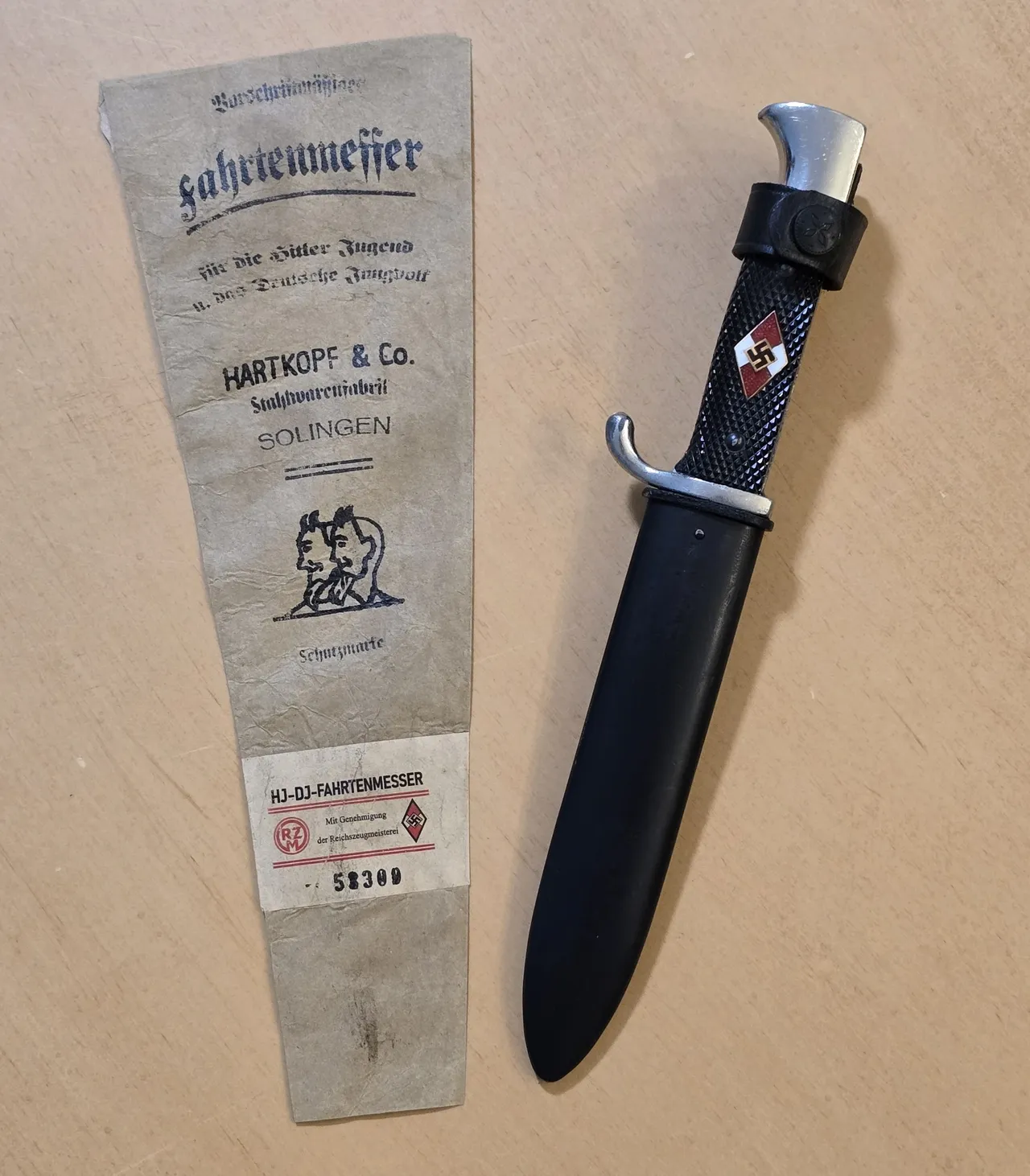
The Hitler Jugend (HJ) dagger, often referred to as the HJ knife, is one of the most recognizable youth-issued edged weapons of the Third Reich period. Designed as both a symbolic and functional item, it represented discipline, loyalty, and training for future military service within the Hitler Youth.
This comprehensive guide explores the history, variations, makers, Deutsches Jungvolk (DJ) knives, and rare bayonet-style examples, along with expert-level collector insights.
Historical Background of the HJ Dagger
Introduced in 1933, shortly after the rise of Adolf Hitler and the consolidation of the youth movement, the HJ dagger became a standard-issue item for members of the Hitler Jugend.
Purpose & Symbolism:
- Awarded after passing the Pimpf (youth) proficiency tests
- Symbolized entry into a structured ideological and paramilitary system
- Served as both a ceremonial dagger and utility knife
Blade Motto:
Most early HJ knives feature the inscription:
“Blut und Ehre!” (“Blood and Honor!”)
This motto reinforced the ideological indoctrination central to the youth program.
Types of Hitler Jugend Knives
1. Early HJ Knife (1933–1936)
- High-quality nickel fittings
- Motto engraved on blade
- Maker-marked (pre-RZM period)
- Enamel diamond insignia set into grip
👉 These are highly desirable and valuable to collectors.
2. Transitional Period (1936–1938)
- Introduction of RZM (Reichszeugmeisterei) codes
- Gradual shift in materials and finish
3. Late HJ Knife (1938–1945)
- Simpler construction
- Motto often removed from blade
- Zinc or plated fittings
- Fully RZM-coded production
👉 More common, but still collectible depending on condition.
4. Rare Variants
- Sawback (serrated spine) versions (controversial and scarce)
- Personalized or engraved presentation pieces
- Leader variants with unique markings
Deutsches Jungvolk (DJ) Knives
The Deutsches Jungvolk (DJ) was the junior division of the Hitler Jugend, typically for boys aged 10–14.
DJ Knife Characteristics:
- Smaller than standard HJ dagger
- Similar design with black grip and enamel diamond
- Often lacks blade motto
- Simpler fittings
👉 These knives are less common than standard HJ daggers and are increasingly sought after by collectors.
Hitler Jugend Bayonets & Training Knives
While not officially standard issue in the same way as the HJ dagger, there are bayonet-style knives and longer blade variants associated with youth training and ceremonial use.
Key Points:
- Some resemble short bayonets or extended daggers
- Used in training exercises or parade formations
- Less standardized, making identification more complex
👉 These are niche collectibles and require careful authentication.
Makers & Manufacturing
HJ knives were produced by numerous German firms, primarily in Solingen, the historic blade-making center.
Notable Makers:
- Carl Eickhorn (Solingen)
- Gottlieb Hammesfahr (Solingen-Foche)
- Robert Klaas (Solingen)
- Anton Wingen Jr.
- Emil Voos
RZM Codes:
Later knives feature RZM markings such as:
- M7/36 (Eickhorn)
- M7/13 (Arthur Schüttelhöfer)
👉 These codes help determine:
- Production period
- Manufacturer
- Authenticity
Collecting & Authentication Tips
Due to popularity, HJ knives are heavily reproduced, making knowledge essential.
What to Look For:
- Correct HJ diamond insignia should wiggle slightly
- Proper blade engraving and wear
- Authentic RZM code or maker mark
- Matching scabbard and leather hanger
Warning Signs:
- Bright modern paint or enamel
- Incorrect diamond angle or shape
- Artificial aging or “too perfect” condition
Value & Collector Demand
HJ daggers and DJ knives remain among the most accessible entry-level collectibles in Third Reich militaria—but rare variants can command significantly higher prices.
Value Factors:
- Early vs late production
- Presence of motto
- Maker rarity
- Overall condition
SEO Keywords for ThirdReichShop
Hitler Youth dagger original, HJ knife authentic WW2, Deutsches Jungvolk knife DJ dagger, HJ dagger Blut und Ehre motto, German youth knife Third Reich, HJ knife RZM M7 codes, Carl Eickhorn HJ dagger, Solingen Hitler Youth knife makers, WW2 German youth dagger collectible, HJ knife value guide, DJ knife rare Hitler Youth, German militaria youth dagger, Hitler Jugend knife for sale, authentic HJ dagger enamel diamond, WW2 German knives collectible, Third Reich youth knives original, HJ dagger identification guide, rare HJ sawback knife, German youth bayonet training knife, original WW2 German dagger for collectors
Final Thoughts
The Hitler Jugend dagger and DJ knives are more than just collectible blades—they are artifacts representing the structure and culture of youth organizations during the Third Reich era.
From early high-quality motto blades to later RZM examples, and from standard HJ daggers to rarer DJ knives and bayonet-style variants, these pieces offer a wide and fascinating field for collectors.
Their historical significance, combined with strong collector demand, ensures they remain a cornerstone of German militaria collecting.